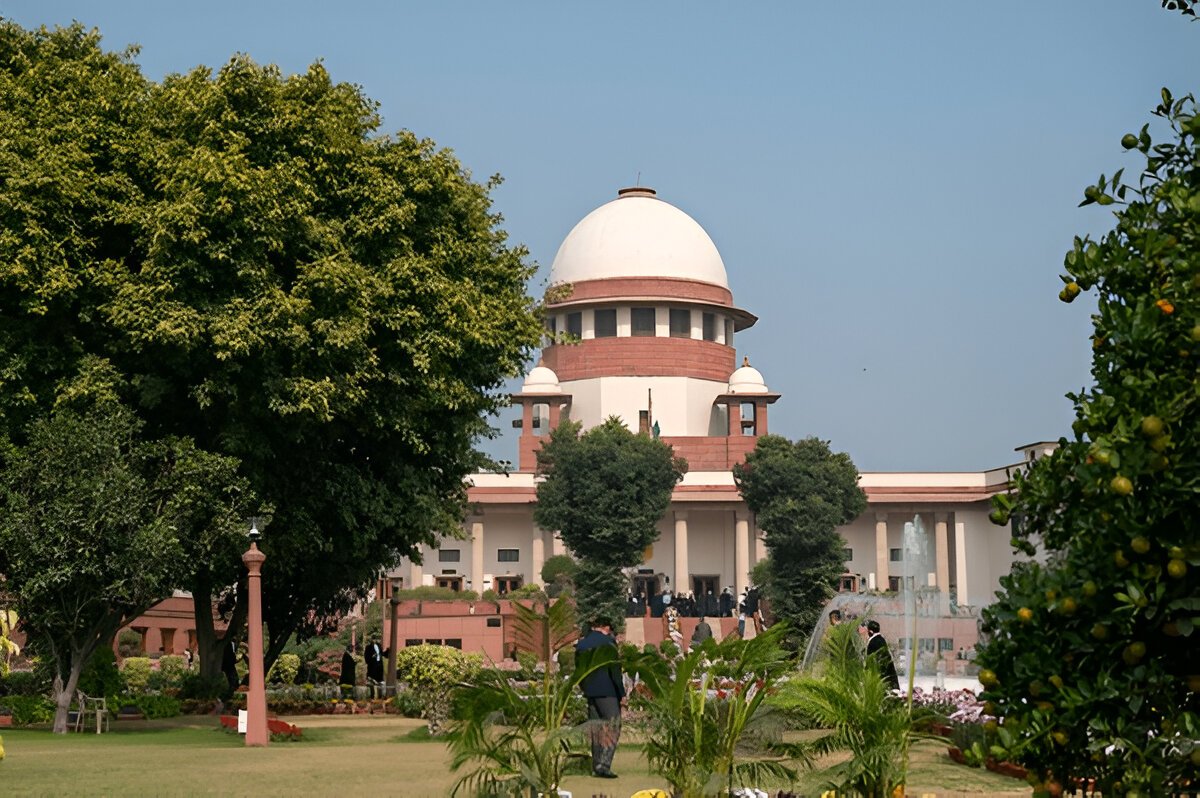
In a recent statement, CJI-designate Justice BR Gavai made a powerful remark that has resonated with legal and political circles alike: “The Supreme Court can’t be aloof when the country is in danger.” This statement, made by the next CJI of India, underscores the importance of judicial responsibility and the Supreme Court’s active role in matters concerning national security, even in the face of extraordinary circumstances.
The Role of SC in National Security
The Supreme Court of India has always been a pillar in safeguarding the Constitution and ensuring that the rule of law prevails, particularly when the nation faces security challenges. Justice BR Gavai, who will take the oath as India's next Chief Justice on May 14, 2025, has articulated the Court’s position clearly: it cannot be distant or indifferent when the country faces threats or turmoil. The statement was made following a full court meeting convened by Justice Gavai after a shocking incident related to national security. His words reflect the Court’s resolve to respond swiftly and responsibly to crises that affect the nation’s peace and stability.
Justice Gavai’s emphasis on the Supreme Court’s duty to remain engaged is particularly significant in the context of India’s security landscape. Whether it’s the recurring issues of terrorism, internal unrest, or even military conflicts, the Supreme Court has consistently played a crucial role in shaping the legal framework that governs national security. In situations where constitutional mechanisms are under threat, the SC on National Security often becomes the final arbiter, ensuring that the balance between national security and fundamental rights is maintained.
You can also read the Judgement of Shah Bano Case.
CJI BR Gavai's Leadership and Vision
Justice Gavai’s leadership style as the next CJI of India will focus on ensuring that the judiciary remains an active force in addressing national concerns. His words on national security echo a deep commitment to uphold the Constitution of India and ensure that the judiciary stands firm in protecting the nation's democratic values.
One of the critical areas of concern that Justice Gavai will address as the new Chief Justice is the backlog of pending cases. In his recent statements, Justice Gavai made it clear that resolving the issue of pendency and addressing judicial vacancies will be one of his key priorities. This focus on judicial reform is crucial not just for the efficiency of the judiciary but also for its ability to respond promptly to matters of national importance, including security issues.
Justice Gavai's Contribution to National Security Issues
Justice Gavai’s track record in handling sensitive national security cases speaks volumes about his commitment to justice. He has been part of various landmark judgments, including the prohibition of illegal bulldozer actions and the ruling that properties of accused individuals cannot be demolished without due process. His decisions demonstrate a deep understanding of the intersection between law and the social-political landscape, making him uniquely positioned to lead the judiciary during turbulent times.
Furthermore, Justice Gavai's role in ensuring justice in the Manipur crisis through NALSA’s intervention shows his proactive approach to legal and humanitarian issues. His leadership in sending a team of senior judges to relief camps in Manipur highlights the importance of legal aid in conflict zones and reaffirms the judiciary’s role in supporting national security in the face of human rights violations.
The Future of India's Judiciary
As the next CJI of India, Justice Gavai’s tenure promises to bring a new sense of urgency and focus to the judiciary's role in national security. His statement that the Supreme Court cannot be aloof when the country is in danger signals a more engaged and responsive judiciary, one that recognizes the need to take swift action in times of national crisis.
His approach aligns with the broader vision of ensuring that the Supreme Court does not just serve as a passive observer but as an active participant in shaping the country's response to security challenges. With pending cases being a priority and judicial vacancies to be filled, Justice Gavai’s leadership will certainly help in fortifying the Court's ability to deal with both routine legal matters and issues of national importance.
In conclusion, as CJI BR Gavai prepares to take on his new role, his commitment to ensuring that the Supreme Court remains engaged and responsive to national security concerns is commendable. His tenure is likely to be marked by efforts to reform the judiciary, address case backlogs, and ensure that the judiciary is equipped to handle matters of national and constitutional importance.